Tuesday, 18 December 2012

David Downton

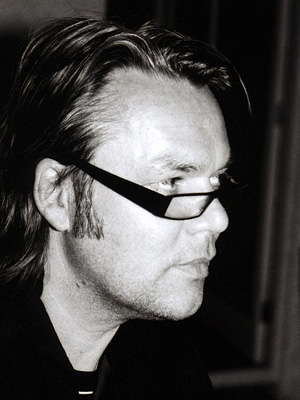
David Downton was born in Kent, in the south of England in 1959. He studied illustration and graphics at Woleverhampton from 1979 to 1981. A the age of 24 he moved to Brighton and began his illustration career. H worked on a wide variety of projects ranging from advertising and packaging to illustrating fiction, cook books and, occasionally, fashion till 1996. In the same year David was asked to draw at the Paris couture shows by the Financial Times. Since then be became world famous fashion illustrator and his reports from the shows have been seen internationally.

Downtow was wroking for Vogue, Tiffany & Co, Topshop,  Chanel, Dior, L'Oreal and many more. In 1998, he began working on a portfolio of portraits of the world’s most beautiful women like Erin O’Connor, Paloma Picasso, Catherine Deneuve, Linda Evangelista, Carmen Dell'Orefice, Iman and Dita Von Teese.

I

Sunday, 9 December 2012

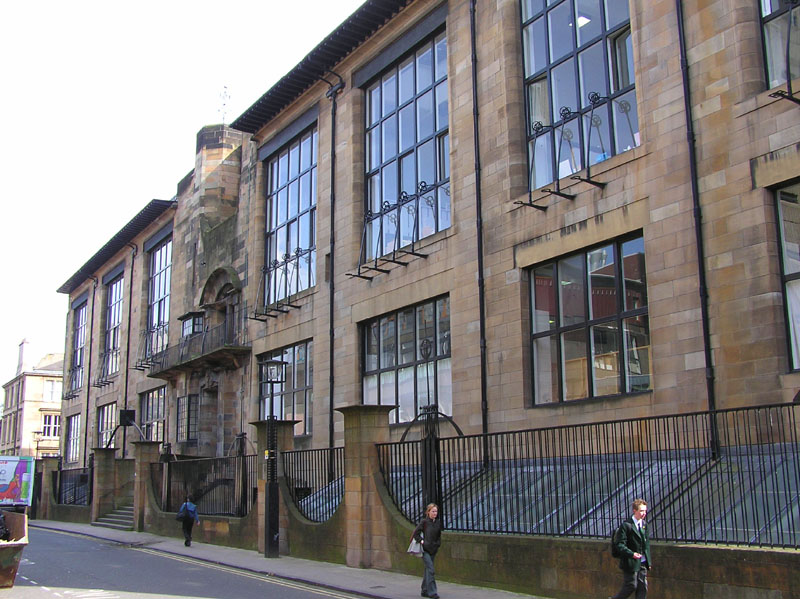
Charles Rennie Mackintosh 1868-1928

Scottish architect and designer who was prominent in the Arts and Crafts Movement in Great Britain. He was apprenticed to a local architect, John Hutchinson, and attended evening classes at the Glasgow School of Art. In 1889 he joined the firm of Honeyman and Keppie, becoming a partner in 1904.
In collaboration with three other students, one of whom, Margaret Macdonald, became his wife in 1900, Mackintosh achieved an international reputation in the 1890s as a designer of unorthodox posters, craftwork, and furniture. In contrast to contemporary fashion his work was light, elegant, and original, as exemplified by four remarkable tearooms he designed in Glasgow and other domestic interiors of the early 1900s.
Mackintosh’s chief architectural projects were the Glasgow School of Art (1896–1909), considered the first original example of Art Nouveau architecture in Great Britain. By 1914 he had virtually ceased to practice and thereafter devoted himself to watercolour painting.
Although Mackintosh was nearly forgotten for several decades, the late 20th century saw a revival of interest in his work. The stark simplicity of his furniture designs, in particular, appealed to contemporary taste, and reproductions of Mackintosh chairs and settees began to be manufactured. The Mackintosh House in Glasgow was reconstructed and opened to the public as a museum in the late 1970s.

I have studied the design of Mackintoshe's chairs carefully, because I was asked to desing a chair in his style, which was using shapes like flora or fauna. I quite enjoy this project as this was the first artist I have studiet who was inspired by nature. I had a variety range of choice and I was coming up with more ideas than for the other projects as I could mix tree curvy shapes for back and leafs for the sit.


Sunday, 18 November 2012

Marcel Lajos Breuer


Marcel Lajos Breuer (May 21, 1902 Pécs, HungaryJuly 1, 1981 New York City), architect and furniture designer, was an influential modernist of a Jewish decent. One of the fathers of Modernism, Breuer showed a great interest in modular construction and simple forms. Marcel studied and taught at the Bauhaus in the 1920s, stressing the combination of art and technology, and eventually became the head of the school's cabinet-making shop. He later practiced in Berlin, designing houses and commercial spaces, as well as a number of tubular metal furniture pieces, replicas of which are still in production today. Perhaps the most widely-recognized of Breuer's early designs was the first bent tubular steel chair, later known as the Wassily Chair, designed in 1925 and inspired, in part, by the curved tubular steel handlebars on Breuer's Adler bicycle.

He was influent by modernism of a Jewish decent and was inspired by the curved tubular steel handlebars. I didnt enjoy studying this designer, because its not a first architect who used curve and steel shapes, it wasnt anything new to me.

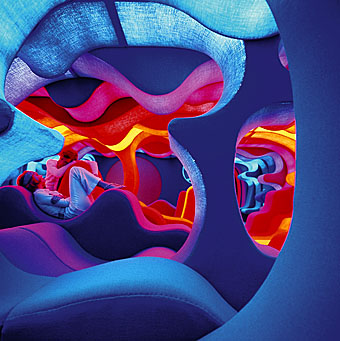
Verner Panton 1926-1998


Verner Panton was one of the mos influential designers of the 1960s and '70s. Born in Denmark, Panton relocated to Switzerland in the early 1960s. He become known for his original and imaginative designs in the fields of furniture, lighting and textiles. In addition to his expirements with shape and colou, Verner Panton was ethusiastic about the design potential of plastic a new material at the time. One of his ambitions was to create a comfortable, all-purpase plastic chair moulded in a single piece.

I enjoyed looking through this designer as he not only designed furniture, but he was an interior designer which I am intrested in. His project are really different and unique as I never seen this kind of work. He used curve spahes and bright colours. I might use Verner Panton as a inspiration for my final piece.

Tuesday, 23 October 2012

Agnes Decourchelle

In my opinion this picture is about a family who have met after a long time. I actually like this piece of work, because of contarts between hot and cold colours. Agnes Decourchelle's work is really colorfull, and it is definetly not boring. I guess she was trying to make the illustration happy, because she mainly used warm colours like yellow or red. However I think it is summer, as she used a yellow colour for the doors, so its like the sun is shaning. By looking at this picture I can tell Decourchelle used watercolour pencils, also her work is done really detailed, bright and sketchy.

Frank Gehry

Raised in Toronto, Canada, Frank Gehry moved with his family to Los Angeles in 1947. Mr. Gehry received his Bachelor of Architecture degree from the University of Southern California in 1954, and he studied city planning at the Harvard University Graduate School of Design. Mr. Gehry has built an architectural career that has spanned four decades and produced public and private buildings in America, Europe and Asia.
 After studying architecture at the University of Southern California and spending a year at the Harvard Graduate School of Design, Gehry established his own architecture office in 1962, in Los Angeles. Ten years into his career, Gehry launched the value-based Easy Edge chair series constructed from laminated cardboard.

Monday, 22 October 2012

Gerrit Rietveld


Gerrit Rietveld (24 June 1888–25 June 1964) was a Dutch furniture designer and architect. One of the principal members of the Dutch artistic movement called De Stijl, Rietveld is famous for his Red and Blue Chair and for the Rietveld Schröder House, which is a UNESCO World Heritage Site.

Rietveld designed his famous Red and Blue Chair in 1917. In 1918, he started his own furniture factory, and changed the chair's colors after becoming influenced by the 'De Stijl' movement, of which he became a member in 1919, the same year in which he became an architect. He designed his first building, the Rietveld Schröder House, in 1924. He designed the "Zig-Zag" chair in 1934 and started the design of the Van Gogh Museum in Amsterdam, which was finished after his death. He built hundreds of homes, many of them in the city of Utrecht.

I was carefully looking at the Red and Blue Chair design, beacues I was asked to make a model using the measurements of three people in my class I did few days ago. I devided it by 3 as I wanted to do it in a third size of an actual chair. I used pieces of cardboard boxes, a glue gun and acrylic paint to colour it according to the original chair. I took few photos while making my model to have the comparison between my and the original project, which then I stuck in my sketchbook. I quite enjoyed making this model chair, but it was a bit challenging.