Born in Scotland in 1959 but raised in Canada, Peter Doig moved to London in
1979 where he studied at Wimbledon, St Martin's and Chelsea Schools of Art. He
first gained public recognition in 1991 on winning the Whitechapel Art Gallery's
Artist Award, and from then on continued to consolidate his reputation as one of
the very finest figurative artists of his generation. Often referencing
photograph and film, but transforming such sources into dream-like, almost
mystical imagery, Doig's work typically explores man's interaction with an
emotionally charged physical environment. The artist currently lives and works
in Trinidad. This
painting was done in 1993 by Peter Doig. He was working on this painting for
three months before he added the reflection of the three figures. The picture
is showing three people, who are standing on a frozen lake and you can see a
house in the background I would say it’s probably a family. However this
painting might be showing artist memories or his childhood. It’s colourful and positive, but by him using
blue for the trees and white dots which symbolise snow its winter time.
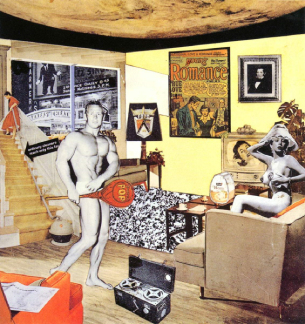
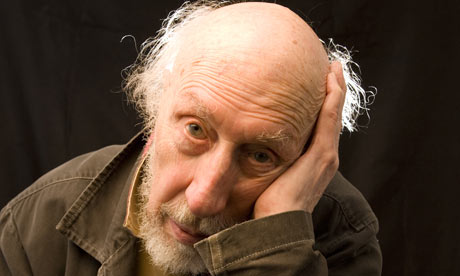
Richard Hamilton was born in London on 24 February 1922. From 1938 to 1940 before he
studied painting at the Royal Academy School, he attended art classes as a
teenager. From 1942 he worked as an industrial designer for four years, and
then he was expelled from Royal Academy School, because he defied his teacher
instructions. Between 1928 and 1951 he moved to Slade School of Art in London. After
a trip to New York in 1963, Richard Hamilton began to combine elements of
photography and painting in his pictures. In 1962 his first wife Terry was killed in a car crash
and in part to recover from this he traveled for the first time to the United
States in 1963. During the 1980s he intensively
studied the opportunities provided by digital media and their effect on image
perception and fine arts. I don’t really like this artist, because for me it’s
just taking images from different sources and sticking them so they work well
with each other to make a one piece. Richard Hamilton was my inspiration for
one of the projects I had to do. I was meant to look through different
magazines for images that I would use to make a collage. I found it a little
bit boring, because basically what I had to do was cutting out and stacking
them on one piece.
Vincent Van Gogh was born on March 30, 1853 and died in 1890. He was Dutch artist. Between 1860 and 1880, when he finally decided to become an artist, van Gogh
had two unsuitable and unhappy romances and had worked unsuccessfully as a clerk
in a bookstore. Van Gogh remained in Belgium to study art. In 1886 he went to Paris and studied with Cormon. He met Pissaro, Monet and Gauguin and began to lighten his very dark palette and to paint in the short brushstrokes. Van Gogh's finest works were produced in less than three years in a technique that grew more and more impassioned in brushstroke, in symbolic and intense color, in surface tension, in the movement and vibration of form and line. Van Gogh is considered a Post-Impressionist. He has also been described as a sort of Expressionist due to his use of color to express emotion. He is, in a sense, hard to classify because of his uniqueness.
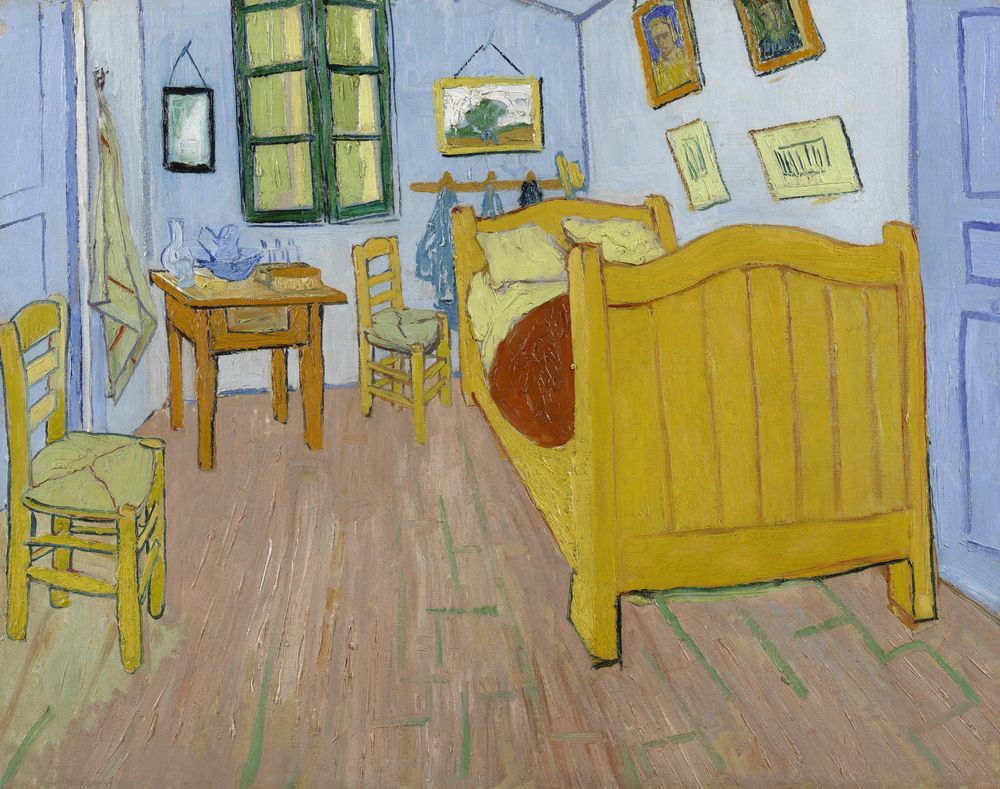
This specific painting, now in the collection of the Van Gogh Museum in
Amsterdam, was the first of the three oils that Van Gogh produced.The bright and bold use of color in Vincent's Bedroom in Arles is
typical of the palette he began to use beginning late in his Paris
period. Yellow was Van Gogh's favorite color throughout s Arles and Saint-Rémy period.
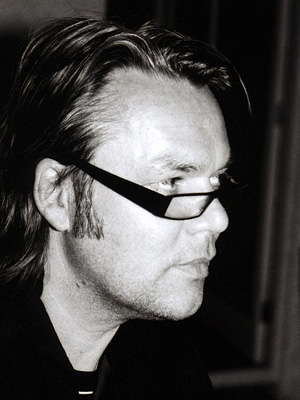
David Downton was born in Kent, in the south of England in 1959. He studied illustration and graphics at Woleverhampton from 1979 to 1981. A the age of 24 he moved to Brighton and began his illustration career. H worked on a wide variety of projects ranging from advertising and packaging
to illustrating fiction, cook books and, occasionally, fashion till 1996. In the same year David was asked to draw at the Paris couture shows by the Financial Times. Since then be became world famous fashion illustrator and his reports from the shows have been seen internationally. Downtow was wroking for Vogue, Tiffany & Co, Topshop, Chanel, Dior, L'Oreal and many more. In 1998, he began working on a portfolio of portraits of the
world’s most beautiful women like Erin O’Connor, Paloma Picasso, Catherine Deneuve, Linda Evangelista, Carmen Dell'Orefice, Iman and Dita Von Teese.
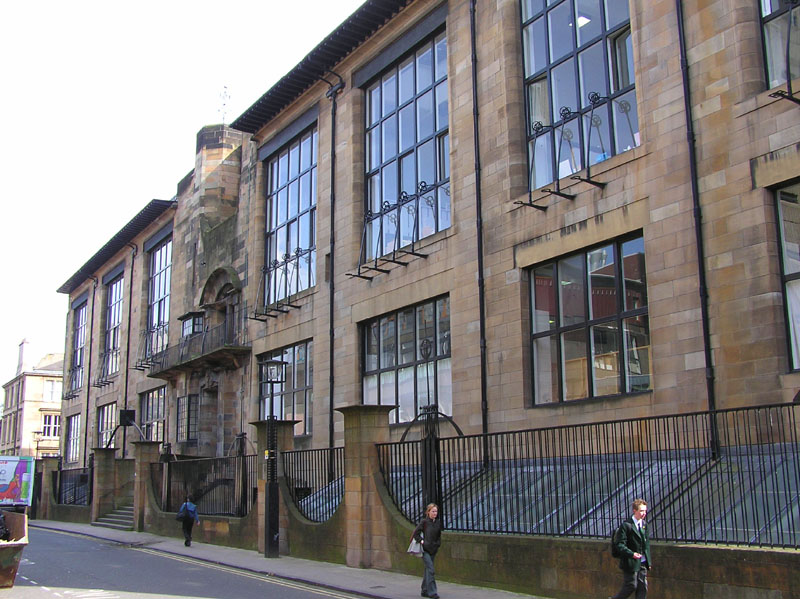
Scottish architect and designer who was prominent in the Arts and Crafts Movement in Great Britain. He was apprenticed to a local architect, John Hutchinson, and attended evening classes at the Glasgow School of Art. In 1889 he joined the firm of Honeyman and Keppie, becoming a partner in 1904. In collaboration with three other students, one of whom, Margaret Macdonald, became his wife in 1900, Mackintosh achieved an international reputation in the 1890s as a designer of unorthodox posters, craftwork, and furniture. In contrast to contemporary fashion his work was light, elegant, and original, as exemplified by four remarkable tearooms he designed in Glasgow and other domestic interiors of the early 1900s. Mackintosh’s chief architectural projects were the Glasgow School of Art (1896–1909), considered the first original example of Art Nouveau architecture in Great Britain. By 1914 he had virtually ceased to practice and thereafter devoted himself to watercolour painting. Although Mackintosh was nearly forgotten for several decades, the late 20th century saw a revival of interest in his work. The stark simplicity of his furniture designs, in particular, appealed to contemporary taste, and reproductions of Mackintosh chairs and settees began to be manufactured. The Mackintosh House in Glasgow was reconstructed and opened to the public as a museum in the late 1970s.
I have studied the design of Mackintoshe's chairs carefully, because I was asked to desing a chair in his style, which was using shapes like flora or fauna. I quite enjoy this project as this was the first artist I have studiet who was inspired by nature. I had a variety range of choice and I was coming up with more ideas than for the other projects as I could mix tree curvy shapes for back and leafs for the sit.
Marcel
Lajos Breuer (May 21, 1902Pécs, Hungary – July 1, 1981New York City), architect and furnituredesigner, was an influential modernist of a Jewish decent. One of the fathers of Modernism, Breuer showed a great interest in
modular construction and simple forms. Marcel studied and taught at the Bauhaus in the 1920s, stressing the combination
of art and technology, and eventually became the head of the school's
cabinet-making shop. He later practiced in Berlin, designing houses and commercial spaces, as well as a
number of tubular metal furniture pieces, replicas of which are still in
production today. Perhaps
the most widely-recognized of Breuer's early designs was the first bent tubular
steel chair, later known as the Wassily Chair, designed in 1925
and inspired, in part, by the curved tubular steel handlebars on Breuer's Adler
bicycle.
He was influent by modernism of a Jewish decent and was inspired by the curved tubular steel handlebars. I didnt enjoy studying this designer, because its not a first architect who used curve and steel shapes, it wasnt anything new to me.
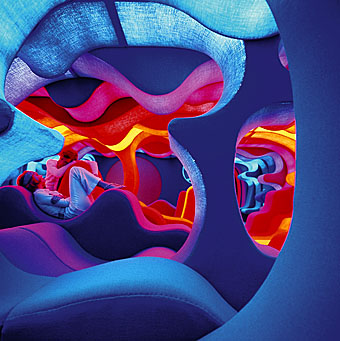
Verner Panton was one of the mos influential designers of the 1960s and '70s. Born in Denmark, Panton relocated to Switzerland in the early 1960s. He become known for his original and imaginative designs in the fields of furniture, lighting and textiles. In addition to his expirements with shape and colou, Verner Panton was ethusiastic about the design potential of plastic a new material at the time. One of his ambitions was to create a comfortable, all-purpase plastic chair moulded in a single piece.
I enjoyed looking through this designer as he not only designed furniture, but he was an interior designer which I am intrested in. His project are really different and unique as I never seen this kind of work. He used curve spahes and bright colours. I might use Verner Panton as a inspiration for my final piece.
 Born in Scotland in 1959 but raised in Canada, Peter Doig moved to London in
1979 where he studied at Wimbledon, St Martin's and Chelsea Schools of Art. He
first gained public recognition in 1991 on winning the Whitechapel Art Gallery's
Artist Award, and from then on continued to consolidate his reputation as one of
the very finest figurative artists of his generation. Often referencing
photograph and film, but transforming such sources into dream-like, almost
mystical imagery, Doig's work typically explores man's interaction with an
emotionally charged physical environment. The artist currently lives and works
in Trinidad.
Born in Scotland in 1959 but raised in Canada, Peter Doig moved to London in
1979 where he studied at Wimbledon, St Martin's and Chelsea Schools of Art. He
first gained public recognition in 1991 on winning the Whitechapel Art Gallery's
Artist Award, and from then on continued to consolidate his reputation as one of
the very finest figurative artists of his generation. Often referencing
photograph and film, but transforming such sources into dream-like, almost
mystical imagery, Doig's work typically explores man's interaction with an
emotionally charged physical environment. The artist currently lives and works
in Trinidad. This
painting was done in 1993 by Peter Doig. He was working on this painting for
three months before he added the reflection of the three figures. The picture
is showing three people, who are standing on a frozen lake and you can see a
house in the background I would say it’s probably a family. However this
painting might be showing artist memories or his childhood. It’s colourful and positive, but by him using
blue for the trees and white dots which symbolise snow its winter time.
This
painting was done in 1993 by Peter Doig. He was working on this painting for
three months before he added the reflection of the three figures. The picture
is showing three people, who are standing on a frozen lake and you can see a
house in the background I would say it’s probably a family. However this
painting might be showing artist memories or his childhood. It’s colourful and positive, but by him using
blue for the trees and white dots which symbolise snow its winter time.